BOLT ULTRA
A Revolutionary Leap in Energy Storage
Overview
Bolt Ultra Batteries, which were first created in 1992 with the military in mind, perform far better overall than lead-acid batteries. By employing a unique, exclusive electrolyte consisting of a liquid low-sodium silicate mixture of sodium carbonate, ammonia sulfate, and water, the Bolt Ultra Battery has effectively addressed the shortcomings of lead-acid batteries, which have been in use since the 1970s. These disadvantages include limited life span, low energy & power density, acid corrosion, and pollution from acid mist. By not corroding the electrodes, the newly formulated neutral electrolyte extends the battery’s cycle life. With a lead plate that the electrolyte reacts with, the battery’s general design is fairly similar to lead-acid batteries found in consumer products. With this technique, changing batteries is really easy.
Bolt Ultra Batteries are also known to have a distinct advantage over widely used lead-acid batteries because of their high temperature performance and quick charge time. As the surrounding temperature drops, VRLA (valve regulated lead- acid) batteries generally lose a significant percentage of capacity. Silicate batteries don’t require external battery warmers or warm-up times; they may operate effectively in extremely cold or freezing temperatures. Additionally, they operate at maximum efficiency at extremely hot conditions, where most VRLA batteries lose capacity owing to drying out and lithium ion batteries become unstable, necessitating the need of a lot of air conditioning to keep them cool.
Bolt Ultra Batteries have fast charging capabilities; a high current charger can recharge them to 90% capacity in 60 minutes. Additional benefits include low self-discharge rate—the majority of VRLA batteries lose a significant amount of capacity in just six months—and little internal resistance, which lowers heat. Bolt Ultra Batteries don’t really suffer much damage if left uncharged for two years. In many applications, construction costs can be reduced because there is no requirement for isolation for gas emission during charging and operation, nor is there any off-gassing or temperature rise.
Using fixed points in the charge controller for VRLA or Gel batteries will adequately charge the batteries for renewable energy applications. With most Gel or AGM batteries, you can regularly lower the batteries to a 50% DoD, adding a little capacity to the general guideline that states you shouldn’t go below 30%. The low internal resistance further reduces expenses for extra components by doing away with the requirement for a BTS (battery temperature sensor) inside the battery shell. The characteristics of the silicate compound electrolyte near the end of its life provide one of the biggest advantages of employing these batteries. The ammonium sulfate-based PH neutral solution can actually be used as fertilizer because the battery is non-hazardous. As a result of the electrolyte not deteriorating the plate or producing hazardous lead dust, recycling lead becomes considerably simpler and more environmentally friendly.
Features
World patent protected electrolyte allows rapid recharging without degrading performance
The most advanced green technology: non-corrosive, non-explosive, and without acid mist.
Outstanding results in extremely high and low temperatures.
Overall Characteristics
- The battery's lifespan can be extended while maintaining charging cycles thanks to non-corrosive plates, electrodes, joints, and connectors
- Operates in the sub-zero to seventy degrees Celsius temperature range.
- Does incredibly well in warm weather. In temperatures above 25°, the VRLA battery loses around half of its cycles for every 8°C increase. In the same application, the Bolt Ultra Battery loses an insignificant amount.
- Using 50% or less discharge can result in up to 2200 charging cycles. Completely discharging the battery won't harm it, although it is advised to charge it promptly following a significant discharge in order to preserve charging cycles and extend the battery's lifespan.
- When kept at room temperature (25°C) for two years, the self-discharge rate is roughly 25%.
- Specific energy density of the VRLA battery is 50% lower.
- A 2Ω to 5Ω milli-ohm low internal resistance battery as opposed to a 25Ω milli-ohm 12v lead acid battery.
- Meets international criteria for both storage capacity and recharge acceptance capacity by 1.75 and 2.68 times, respectively.
- Virtually eliminates the need for separate enclosures, ventilation, or cooling systems, which reduces the cost of installation, upkeep, and energy.
- Maximum lifespan of 15 years: In telecom standby applications, 4500–5000 cycles.
- The Bolt Ultra Battery might not fully charge when using a standard lead acid battery charger with a lower charging voltage. To fully charge, chargers with the highest possible capacity are available.
Battery Certifications
- Our batteries are certified Green by the Green Star Environmental Protection Bureau, CE (Conformité Européene), and ISO 14001
- Certification of ISO-9001 issued by Global Certification Ltd.
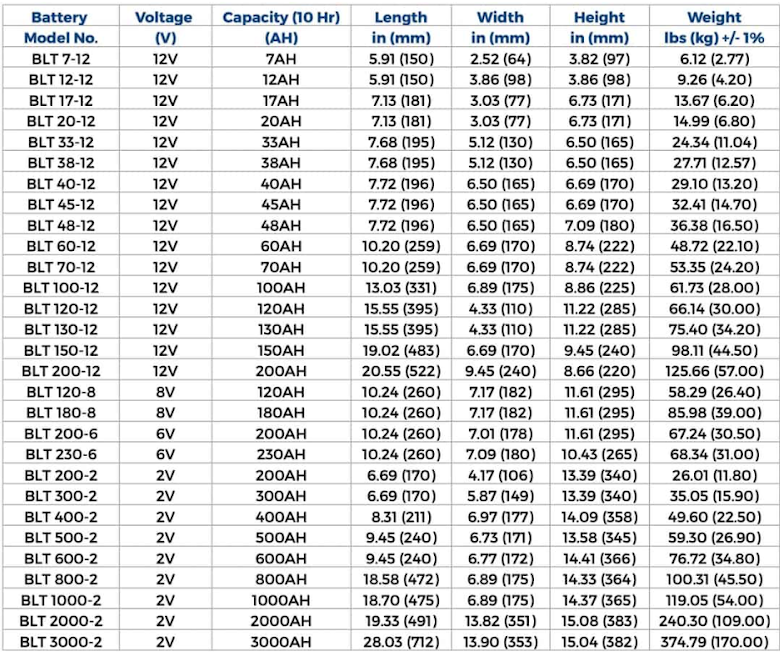
- Information Industry Ministry of the PRC Certification for Network Access and License for Telecommunications Device Network Access in Respect to the Bolt Ultra Battery BLT-2V-1000Ah Telecommunication Release Valve, Certificate for Network Access and License for Telecommunications Device Network Access
- Issued by the Facilities & Instrument Quality Inspection & Testing Centre, Certificate for Release Valve Tightly Sealed in Respect to the Bolt Ultra Battery
- Issued by the Railway Ministry, Certificate for the Bolt Ultra Battery Used in Locomotives
- Issued by the PLA General Intelligence, Network Access License for National Defense Telecommunication Facilities in Respect to the Bolt Ultra Battery Fixed and Tightly Sealed
- Issed by the Factor 5701 of the PLA, Certificate for 6,000 meter depth Sea Battery Performance Testing in Respect to the Bolt Ultra Battery (12V-38Ah) in Submarine Applications
- Issued by the PLA Air Force Aero Material 4th Station Equipment Institute, Cerificate for 14V-182 Ah (10hr) Aeronautical Bolt Ultra Battery in Fighter Jets
Discharging Of Batteries
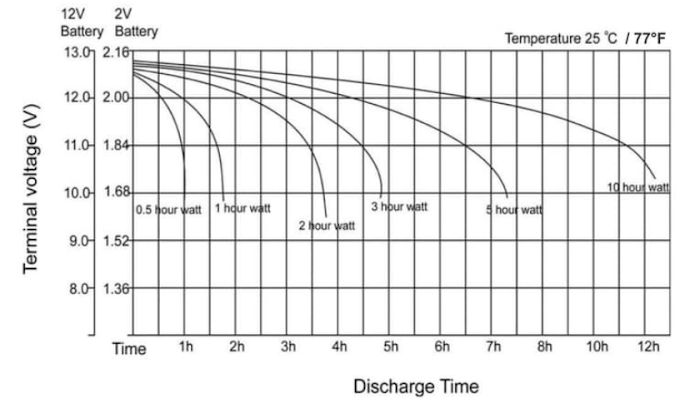
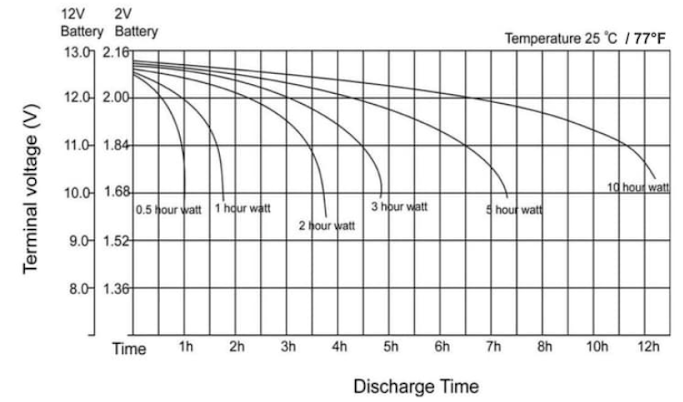
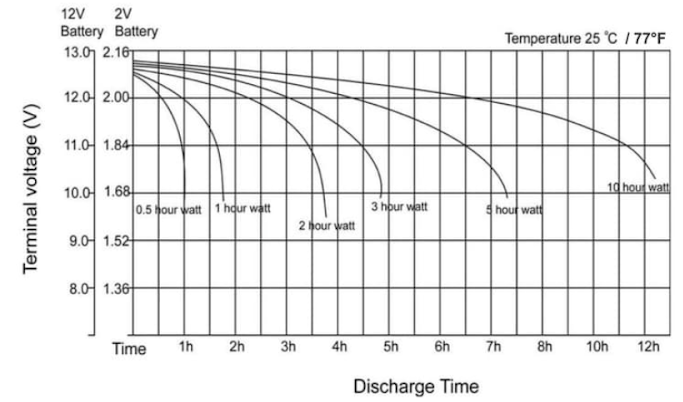
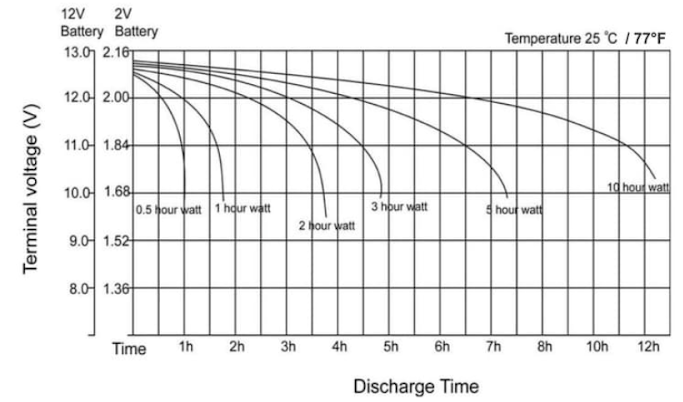
- Owing to the Bolt Ultra Battery's unique properties, it is advised to discharge the battery continuously to increase its lifespan. Nonetheless, the Bolt Ultra's powerful discharge capability allows it to easily adjust to steady voltage or steady current.
- A charging and draining ratio of 1:0.3 is advised in most situations. However, the ratio can be changed to 1:1 with high current charging and discharging.
- Bolt Ultra batteries are capable of dealing with 100% high discharge without experiencing any harm; however, in order to maximize battery life and maintain charging cycles, the manufacturer recommends that users charge their batteries right away following high discharge. For a longer battery life, the manufacturer advises not discharging the battery above 90%.
- ations Device Network Access in Respect to The Bolt Ultra Battery; Telecommunications Release Valve; Certificate for Network Access & License for Telecommunications Device Network Issued by The Information Industry Ministry of the PRC
- Certificate for Network Access License for National Defense Telecommunication Facilities in Respect to The Bolt Ultra Batteries Fixed & Tightly Sealed Issued by the PLA General Intelligence
- Greenball Electric Vehicle Technical Center, Battery Test Performance Characterization of the Bolt Ultra Batteries in Electric Vehicle Applications; Project Report No. TC-01-0147-TR01 Issued by Edison International Company
Bolt Ultra Superior Performance Battery